
The Aveyard Collection brings together a trusted suite of clear, practical and student-focused guides designed to support learners and practitioners across health and social care. Grounded in the work of Helen Aveyard and collaborators, and shaped by real student challenges, the collection focuses on developing confidence in research, critical thinking, writing and evidence-based practice. Each title offers step-by-step guidance, breaking down complex processes into manageable stages, and providing accessible, academically rigorous support that can be applied directly to assignments, projects and professional development.
The Authors
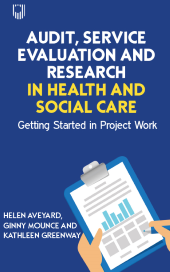
Audit, Service Evaluation and Research in Health and Social Care: Getting Started in Project Work, 1st Edition
Audit, Service Evaluation and Research in Health and Social Care is the go-to guide to key research methods for small-scale projects across healthcare disciplines. It leads the reader through every stage of the research process, from planning a project and selecting appropriate methods of data collection and analysis, to disseminating findings. This essential resource supports both students and practitioners in undertaking their research projects
This book highlights the value of small-scale research and gives readers the confidence to use practical approaches to solving clinical problems and achieving positive research outcomes.
This guide will provide:
- Clear accounts of research methods and support in identifying where nuanced approaches should be applied
- Real life examples of student projects from the authors’ own teaching experience
- An overview of ethical approval processes and permissions required to gather data
- Guidance on compiling findings into a written discussion that demonstrates how gathered data has answered the research question
- ‘Key Points’ chapter summaries and signposting to additional resources to consolidate learning
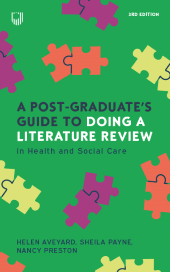
A Post-Graduate's Guide to Doing a Literature Review in Health and Social Care, 3rd Edition
Now in its third edition, this essential guide to writing a literature review in health and social care remains the go-to resource for postgraduate students undertaking this crucial component of their studies. The book provides a clear, step-by-step approach to doing a literature review from start to finish, enabling you to:
- Identify which type of review is appropriate for your study
- Pinpoint the literature that you need to include in your review
- Search for, appraise and analyse relevant literature
- Write up your review
Refreshed with up-to-date methods, new case studies and reflections on maintaining rigour alongside the use of artificial intelligence (AI), this edition also includes discussion and categorisation of different types of literature reviews, offering guidance on when and how each approach can be effectively applied to your research.
This new edition is the ultimate resource for students engaged in conducting a literature review or studying review methods. With real-life examples of written research across health and social care disciplines, succinct summaries, and clear signposting to further resources A Post-Graduate’s Guide to Doing a Literature Review in Health and Social Care is the ideal text for students striving to maximise the impact of their study.
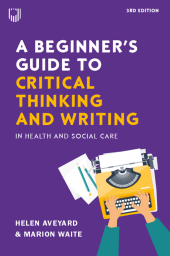
A Beginner's Guide to Critical Thinking and Writing in Health and Social Care, 3rd Edition
Returning in its third edition, this bestselling guide takes you through every stage of becoming a critical thinker, from approaching your subject to writing your essays or dissertation in health and social care. Each chapter tackles a different aspect of critical thinking and shows you how it’s done using examples and simple language.
Beginning with an overview of the importance of critical thinking, the book goes on to cover:
- How to think more critically about readily available information
- How to find the ‘best available’ evidence and be more critical of it
- How to demonstrate critical thinking in written work and presentations
- How to adopt critical thinking in practice
- How critical thinking can play a key part in the development of health and social care services
Refreshed with up-to-date theory and contemporary ideas throughout, this fully revised third edition includes:
- Further examples to illustrate important points
- Additional activities to help deepen learning
- New sections on writing with a critical voice from notetaking to a final draft
- Advice about thinking and writing critically when using online resources and social media
- Further developments to the key tool ‘Six questions for critical thinking’ which will assist you in developing your skills for academic work and practice - updated for this edition in response to student evaluation
This book is an essential purchase for students and qualified healthcare staff alike.
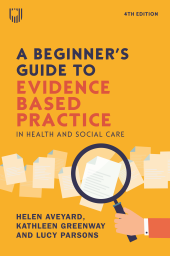
A Beginner's Guide to Evidence-Based Practice in Health and Social Care, 4th Edition
A Beginner's Guide to Evidence-Based Practice in Health and Social Care, 4th edition is the book for anyone who has ever wondered what evidence-based practice is, or how to relate it to practice or use it in academic work. Thoroughly revised with two new co-authors this brand new edition uses simple and jargon-free language to help those new to the topic. It provides an accessible step-by-step guide to what we mean by evidence in practice and how to apply this concept to learning and practice.
This new edition features:
- New explanations with examples from both health and social care practice, using a wide range of research that is also relevant outside of the UK
- Coverage of new discourse on the use of evidence generated by COVID-19
- Coverage on the role, need and quality of rapid reviews
- New end-of-chapter questions to help assess how much you have learned
This book provides an inter-professional approach and is key reading for both students and professionals who need to search for, appraise and apply evidence across nursing, allied health care or social care.
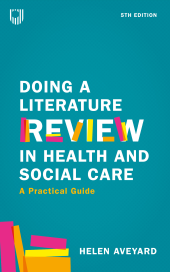
Doing a Literature Review in Health and Social Care: A Practical Guide, 5th Edition
This best-selling book, now in its fifth edition, is a step-by-step guide to doing a literature review for students in all areas of health and social care. It is essential reading for all those doing their undergraduate dissertation or any study that involves doing a literature review.
The new edition maintains its signature ‘can do’ approach and provides a practical guide to doing a literature review from start to finish. This book includes:
- A broad and updated range of real life examples of how to overcome challenges in the process
- Tips on how to get your question right
- Updated guidance on following a clear search strategy for relevant literature using the appropriate technology
- Brand new and accessible chapter summaries
- An expanded guide for the application of critical appraisal tools
- An increased emphasis on presenting your findings or using them in practice
- Tips and coverage on how to write up your review
Doing a Literature Review in Health and Social Care is vital reading for anyone new to reviewing and presenting evidence in a review.
Praise for the series
View our webinar: Talking with Dementia, Reconsidered: A Journey of Collaboration and Innovation in Dementia Care
Discover:
- Behind-the-scenes insights: Learn about the collaborative process that led to the creation of this landmark resource in the field of Dementia context of the Reconsidering Dementia Series.
- Expert perspectives: Hear from Dr. Keith Oliver, a leading advocate for dementia living with the condition, and Reinhard Gus, a renowned clinical psychologist.
- Firsthand accounts: Gain insights from individuals living with dementia.
- Best practices: Discover practical strategies for improving dementia care.
- This webinar offers a unique opportunity to learn from experts and gain a deeper understanding of dementia care.
Interested in using these titles?
If you are interested in using these titles on your course, contact our Marketing team at: