
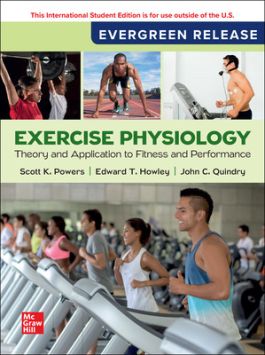
Exercise Physiology: Theory and Application to Fitness and Performance: 2026 Release ISE
Receive via shipping:
- Colour, print bound version of the complete text
Section 1: Physiology of Exercise
Introduction to Physiology of Exercise
1. Common Measurements in Exercise Physiology
2. Control of the Internal Environment
3. Bioenergetics
4. Exercise Metabolism
5. Cell Signaling and the Hormonal Responses to Exercise
6. Exercise and the Immune System
7. The Nervous System: Structure and Control of Movement
8. Skeletal Muscle: Structure and Function
9. Circulatory Responses to Exercise
10. Respiration during Exercise
11. Acid-Base Balance during Exercise
12. Temperature Regulation
13. The Physiology of Training: Effects of Aerobic and Anaerobic Training
14. The Physiology of Resistance Training
Section 2: Physiology of Health and Fitness
15. Exercise Is Medicine - Part 1: Prevention of Chronic Diseases
16. Exercise is Medicine - Part 2: Therapy for Chronic Diseases and Prevention of Age-related Physiological Dysfunction
17. Exercise is Medicine - Part3: Exercise Prescriptions for Health and Fitness
18. Nutrition, Body Composition, and Weight Management
Section 3: Physiology of Performance
19. Factors Affecting Performance
20. Training for Performance
21. Training for the Female Athlete, Children, Special Populations, and the Masters Athlete
22. Nutrition, Body Composition, and Performance
23. Exercise and the Environment
24. Ergogenic Aids
Appendices
A: Calculation of Oxygen Uptake and Carbon Dioxide Production
B: Dietary Reference Intakes: Estimated Energy Requirements
C: Dietary Reference Intakes: Vitamins
D: Dietary Reference Intakes: Minerals and Elements
E: Percent Fat Estimate for Men: Sum of Triceps, Chest, and Subscapula Skinfolds
F: Percent Fat Estimate for Women: Sum of Triceps, Abdomen, and Suprailium Skinfolds
G: MET Equivalents for Exercise, Activities of Daily Loving, and Household Chores
Glossary
Index

McGraw Hill Connect is an award-winning digital teaching and learning solution that empowers students to achieve better outcomes and enables instructors to improve course management efficiency.
High-Quality Course Material
Our trusted solutions are designed to help students actively engage in course content and develop critical higher-level thinking skills while offering you the flexibility to tailor your course to the ways you teach and the ways your students learn.
Assignments & Automatic Grading
Connect features a question bank that you can select from to create homework, practice tests and quizzes. Dramatically reduce the amount of time you spend reviewing homework and grading quizzes, freeing up your valuable time to spend on teaching.
Analytics & Reporting
Monitor progress and improve focus with Connect’s visual and actionable dashboards. Reports are available to empower both instructors and students with real-time performance analytics.
Seamless Integration
Link your Learning Management with Connect for single sign-on and gradebook synchronization, with all-in-one ease for you and your students.